6/6/11

7 días en Extremadura
7 days in Extremadura

Del 15 al 21 de mayo estuve guiando uno de los viajes organizados por Spainbirds Nature Tours a Extremadura. Siete días dan para mucho y con una buena planificación el registro de casi el 100% de las aves más carismáticas de la zona está prácticamente asegurado. Localizamos un total de 141 especies. Visitamos el Parque Nacional de Monfragüe, los llanos de Cáceres y Belén, los embalses de Arrocampo, Guadiloga y Sierra Brava, los arrozales de Vegas Alta del Guadiana, las cotas altas de la Sierra de Villuercas, pueblos como el de Trujillo... mientras que de camino a Extremadura paramos en los cultivos de Calera y Chozas y en la localidad de Oropesa.

Os dejo con una pequeña selección de fotografías de dicho viaje por tierras extremeñas. Aún estoy pillándole el truco a la cámara...

Vencejo pálido (Trujillo) / Pallid Swift

Vencejo cafre (Monfragüe) / White-rumped Swift

Vaca en los llanos de Belén / Cattle in Belen plains

Triguero (Belen) / Corn Bunting

Roquero rojo (Villuercas) / Rufous-tailed Rock Thrush

Halcón peregrino (Villuercas) / Peregrine Falcon

Gangas ortega (Llanos de Cáceres) / Black-bellied Sandgrouse

Escrbano montesino (Villuercas) / Rock Bunting

Liebre ibérica (Belen) / Iberian Hare

Hembra de Orthetrum Trinacria (Arrocampo) / Female Long Skimmer

Águila culebrera (Monfragüe) / Short-toed Eagle

Críalo (Belen) / Great Spotted Cuckoo

Cogujada común (Trujillo) / Crested Lark

Cigüeña negra / Black Stork (Monfragüe)

Aguilucho cenizo (Llanos de Cáceres) / Montagu's Harrier

Canastera (Vegas Altas) / Collared Pratincole

Aguililla calzada (Monfragüe) / Booted Eagle

Avetorillo (Arrocampo) / Little Bittern

Águila imperial ibérica (Monfragüe) / Spanish Imperial Eagle

Abejaruco (Belen) / Bee-eater


Between 15 and 21 May I was guiding one of the tours organized by Spainbirds in Extremadura. Exploring this region by seven days almost guarantees to see the 100% of its specialities. We finally recorded a total of 141 species. We visited the Monfragüe National Park, plains like Caceres and Belen, reservoirs such as Arrocampo, Guadiloba and Sierra Brava, rice paddies in Vegas Altas, the high mountains of Villuercas and town like Trujillo... on our first day tour in the way to Extremadura we explored the fields of Calera y Chozas and the vecinity town of Oropesa.

Main targets seen included Spanish Imperial Eagle, Eurasian Black Vulture, Egyptian Vulture, Black-shouldered Kite, Montagu's Harrier, Honey Buzzard, Black Stork, Little Bittern, Squacco Heron, Purple Heron, Black-bellied Sandgrouse, Pin-tailed Sandgrouse, Great Bustard, Little Bustad, Roller, Bee-eater, Great-spotted cuckoo, Western Orphean Warbler, Lesser-spotted Woodpecker, Golden Oriol, Alpine, Pallid and White-rumped Swifts, Eurasian Eagle Owl, Black and Black-eared Wheatears, Rock Sparrow, Rock Bunting, Rufous-tailed Rock Thrush, Calandra and Thekla Larks... and a few more!

You will find here a selections of pics made during that tour in all around Extremadura... however I'm still learning about my camera...

De la costa atlántica a los Pirineos
From the Atlantic to the Pyrenees

Del 30 de abril al 15 de mayo estuve guiando a un grupo de pajareros americanos que viajaban a través de la compañía Victor Emmanuel Nature Tours (VENT). Nuestro particular periplo comenzó en Sevilla, para visitar el Parque Nacional de Doñana, las marismas del Odiel y otros humedales costeros atlánticos. Entre las especies registradas más interesantes cabría destacar cerceta pardilla, alcaraván (el único observado en las dos semanas de viaje) alzacola y focha moruna. Al cuarto día de viaje nos trasladamos a Extremadura, con base en Torrejón El Rubio. Magníficas observaciones de cuatro de nuestras águilas a excepción de águila real... a saber, águila imperial, aguililla calzada, culebrera y perdicera. En las estepas un par de machos de sisón, avutardas haciendo la rueda a primera hora de la mañana, gangas ibéricas posadas en el suelo y un par de ortegas en vuelo fugazmente observadas. Críalos, carracas, abejarucos, terreras comunes, calandrias, aguiluchos cenizos y collalba rubia asumieron su papel de actores secundarios de lujo y acudieron puntuales a la cita. En el castillo de Monfragüe nos deleitamos con las acrobacias de los vencejos cafres, y para ver búho real esta vez tuvimos que salir del propio Parque. Un adulto y dos pollos engrosaron la lista de aves detectadas en Extremadura. En el embalse de Arrocampo al menos tres elanios.

Salto a las montañas de Gredos. Siempre espectaculares. La climatología nos jugó una mala pasada y tuvimos el peor día de todos. Aún así pudimos ver entre la niebla y la lluvia un par de machos de pechiazul. Roquero rojo, papamoscas cerrojillo, piquituerto, reyezuelos listado y sencillo, halcón abejero, curruca zarcera (vimos todas las currucas ibéricas a excepción de la tomillera)... pero nos falló el escribano hortelano (fácil en estas fechas) y el verderón serrano, que más tarde veríamos en Pirineos.

Nuevo traslado... esta vez a la montaña palentina. Noche en el Parador de Cervera de Pisuerga. En el poco tiempo que estuvimos pajareando por la zona añadimos a la lista camachuelo, bisbita arbóreo y escribano cerillo. Ya en Picos comenzamos viendo una pareja de pico mediano cebando pollos, y en el paseo desde el Cable a la Vueltona tan sólo 10 especies de aves... pero incluyendo acentor alpino, gorrión alpino, bisbita alpino, chova piquigualda y una preciosa pareja de treparriscos. Qué lujo de sitio...

Después de un largo viaje llegábamos a Pirineos. Nuestra base, como siempre, el Hotel Usón en el Valle de Hecho. No creo que haya muchos hoteles en España con las vistas que tiene este lugar. Al ya mencionado verderón serrano, se le unieron nuevas especies para el viaje, quebrantahuesos, picamaderos negro, mirlo capiblanco, curruca mosquitera... que yo recuerde... ah, y nueva observación de treparriscos. Antes de viajar el último día a Madrid parada obligada en Belchite. No tardamos mucho en ver a nuestro objetivo, la alondra de Dupont... el "diablo". Más gangas de las dos especies, águila real y terrera marismeña, cerraron una magnífica expedición donde se registraron 212 especies de aves. Todas las fotos son copyright del autor: Santi Villa / Spainbirds Nature Tours.


Cercerta pardilla en Doñana / Marbled Duck in Doñana


Focha cornuda (Odiel) / Red-knobbed Coot

Canastera en el Odiel / Collared Pratincole at Odiel marshes


Águila perdicera en Extremadura / Bonelli's Eagle in Extremadura

Elanio común en Arrocampo / Black-shouldered Kite in Arrocampo reservoir

Collalba negra (Monfragüe) / Black Wheatear

Cigüeña negra (Monfragüe) / Black Stork

Aguililla calzada (Monfragüe) / Booted Eagle


Hembra de avutarda (Trujillo - Cáceres) / Female Great Bustard


Pechiazul (Barrerones, Gredos) - Bluethroat


Chova piquigualda (Picos de Europa) / Yellow-billed Chough


Gorrión alpino (Picos) / Snow Finch


Pico mediano (Picos) / Middle-spotted Woodpecker


Rebeco (Picos) / Chamois

Quebrantahuesos (Valle de Hecho) / Lammergeier


Treparriscos (Picos) / Wallcreeper


Picamaderos negro (Valle de Ansó - Pirineos) - Black Woodpecker

Alimoche (Hecho - Pirineos) - Egyptian Vulture


Spain did not disappoint. Birds, wine, amazing scenery in the mountains and plains, and delicious cuisine satisfied every sense. Each of these aspects was brought to the forefront at some point during the tour, particularly the alpine scenery, which was unforgettable. The rugged peaks dominating the skylines of the Picos de Europa and the Pyrenees were sublime. We saw flamingos, spoonbills, storks, bustards, eagle-owl, eagles, hawks, falcons, harriers, sandgrouse, pratincoles, eight species of larks, Firecrest, Bluethroat, Snowfinch, bee-eaters, Lammergeier, Wallcreeper, and Golden-Orioles. Our remarkable raptor list topped 23 species including Booted, Spanish Imperial, Bonelli's, Short-toed, and Golden eagles. Other fauna were spotted too: ocellated lizard, Spanish ibex, chamois, roe and red deer, and a foraging European.
The Stone Curlew (Eurasian Thick-knee) dozing in the olive grove was our first quality bird of the tour. Tom spotted it in the rain while we were waiting for the Rufous-tailed Scrub-Robin to show up. It took a couple more days before we would cross paths with the scrub-robin, but we did. We had three days to explore the woodlands and marshes of the famous Doñana National Park. Along the Atlantic coast marshes of Odiel, near Huelva, we found a great variety of shorebirds and waders. A cooperative Red-crested Coot was one of our first finds in the morning. The low-tide mudflats made for great foraging for the shorebirds. We found Bar-tailed Godwit, Snowy Plover, Red Knot, Common Ringed Plover, Eurasian Curlew, Eurasian Oystercatcher, Curlew Sandpiper, Collared Pratincole, and Audouin's Gull among others. Perhaps most spectacular were the flocks of Greater Flamingos that coursed past several times. The freshwater marshes of Doñana National Park hosted hordes of birds too. Nowhere was this more evident than the heronry at the Jose Antonio Valverde Visitors Center. Great Reed-Warblers rattled off their discordant notes as hundreds of herons, egrets, and ibis carried on about their nesting chores. Many birds were carrying sticks and reeds for nest construction; others sat placidly incubating. Purple and Squacco herons, Little and Cattle egrets, Glossy Ibis, and Black-crowned Night-Herons were the main constituents. The Marbled Teal pair, resting on a log, were the stars of the visitor center. In the marsh itself we enjoyed Northern Lapwings, Eurasian Spoonbills, Greater Flamingos, Red-crested Pochards, and other ducks.
Leaving the wetlands behind, we moved into the region of Extremadura. Monfragüe National Park would be surrounding us for the next couple of days. The rough outcroppings were perfect nesting areas for Eurasian Griffons, and we saw hundreds. The Spanish Imperial Eagle also made its presence known. Salto del Gitano provided us with our only Black Wheatear, and the superb view from Castillo del Monfragüe allowed us to find our only White-rumped Swift. Bee-eaters were abundant in the open country, and we found our only Lesser Spotted Woodpeckers in a cork woodland.
After thoroughly exploring the hills and woodlands, we were off early one morning for the plains of Caceres. In these llanos we found Pin-tailed and Black-bellied sandgrouse, Little and Great bustards, many larks, rollers, and Montagu's Harriers. The highlight was provided by the displaying Great Bustards. With tails flipped forward, heads pulled back, and wings inside out, it was hard to tell which part of the bird you were looking at. The blithe females were responsible for this ridiculous behavior. Displaying males, appearing mostly fluffy-white like giant cottonballs, were easy to spot on the plains. After this show we found ourselves in the beautiful town square of Trujillo for lunch, with Lesser Kestrels and swifts zipping past. As with most buildings, there were the usual stately storks nesting around the square. Later in the day we watched a couple of huge eagle-owl nestlings as their parents stayed hidden nearby. The rock outcrops were great for nesting raptors, but they also hosted some of the little guys like Rock Bunting, Cirl Bunting, Black Redstart, and tits.
Traveling to the Gredos Mountains took us through the Jerte Valley, the cherry capital of Spain. Here we had a great lunch and found our first Gray Wagtails. Our arrival into the mountains was greeted with cold, gray skies. The next morning was no different. Our hunt for the Bluethroat would be a wet one. We hiked up an old Roman road for a couple of kilometers toward the Bluethroats' preferred habitat; unfortunately, we couldn't see the shrubby mountainside, as it was cloaked in fog. We occupied ourselves with the occasional Red-billed Choughs and Dunnocks that revealed themselves nearby. Finally the mist stopped and the clouds lifted, exposing a small group of Spanish ibex grazing placidly nearby. The Bluethroats started to sing and we had some good looks before the clouds descended upon us and it started raining. Victorious, we beat a hasty retreat for some hot coffee and lunch. The afternoon was similar—the weather variably chasing us into the vans and tempting us out again with the changing sky. Pied Flycatcher, Firecrest, Eurasian Nuthatch, and Crested Tit allowed us to see them. A White-throated Dipper popped up in a boulder-strewn stream. Hostal Almanzor and Alfonso kept us warm and well-fed. The next morning was cruelly beautiful. The Gredos Mountains with remaining snow patches were tempting us into their heights, but we had to move on to the Picos de Europa.
A single night at the Parador Cervera de Pisuerga teased us with its spectacular views in every direction, great food, the best wine of the tour, and the most amazing breakfast buffet I have seen. The Bullfinches on the lawn were a bonus. This would be the gateway to the Picos. The pass at Piedras Luengas provided us with our first look at the spectacular soaring heights of the Picos de Europa. After lunch in Potes we found the loudest place under construction in a small village; this was the preferred habitat of the Middle Spotted Woodpecker. A pair attending a nest right next to a construction zone seemed content with their early spring mistake.
Another clear and windless day was at hand for the cable car ride to the top of the mountains. After some mild trepidation we climbed aboard the gondola and shot uphill 2,000 feet in just five minutes. In this nearly barren alpine land of rocks, snowfields, and a few sprigs of vegetation, we found ten species of birds in five hours of birding. Water Pipit, Northern Wheatear, and Alpine Accentor were easy. The White-winged Snowfinch flew past a few times, showing us its striking wing pattern, but not giving good looks.
By lunch time we hadn't heard a Yellow-billed Chough, so we sat down at La Vueltona to listen for Wallcreeper and feed ourselves. Hardly had our packs been cast to the ground before a group of three Yellow-billed Choughs descended. Landing ten feet away from us, they knew what we were having for lunch before we did. Their numbers swelled to more than ten for a while. They dispersed when our dining was done and we started hunting Wallcreeper more seriously.
After a successful trip into the mountains, we needed to make our way back to the cable car landing. We had good looks at lounging chamois, cooling off in the snow banks. Just before the landing we happened upon a group of Snowfinches feeding downhill. Two males would occasionally fly up in display and glide down on their largely white wings, singing all the while. Amazingly, when they landed they would cover up the white and fade into the rocky landscape.Spreading out along the exposed rock, we all scanned and listened for the Wallcreeper. Finally, a pair flew in and a couple of folks saw them before they made a long flight across a huge valley. We were able to view the birds from a distance with the scopes that Santi had run down to retrieve. The birds disappeared into caves and crevices, all the while flicking their crimson wings.

Our last destination was Hecho Valley, in the Pyrenees. Unloading our bags was all we had to do to find our first Lammergeier from the Hotel Uson parking lot. A quick afternoon trip to the Boca del Infierno was just a sampling of the wonderful scenery of the Pyrenees. Soaring peaks, snowfields, and scree slopes made for beautiful vistas over the rushing streams, forests, and grassy valleys. We had just scoped the rare Citral Finch before the clouds closed in on us one last time. Our efforts to see a Ring Ouzel well were foiled by the mist and fog.
In the pine forest, a Black Woodpecker looked around while everyone enjoyed scope views. We made a morning visit to San Juan de la Peña Monastery, dating from the 11th century. An afternoon sighting of Lammergeier satisfied everybody as it glided around allowing good looks before drifting off. Wallcreeper was another target in the Gabardito Refuge, and most that made the effort of the hike were rewarded with additional views of this fantastic bird.
Our final morning found us again in open country, this time the Belchite Steppes area. Along the highway we got great looks at a young Golden Eagle, sitting stately on a bluff. Our main quarry was Dupont’s Lark, which we found singing shortly after we arrived. Better views of sandgrouse were also on order. While we found them flying around once again, they kept their distance.
A total of 211 species in two weeks of birding through a spectacular, scenic country with wonderful food and wine made for a great trip.
Trip report by VENT leader Brian Gibbons

29/4/11

Viaje a Turquía 15 - 24 abril
Birding tour to Turkey 15 - 24 April


Sin apenas tiempo para comentar lo que dio de sí nuestro viaje a Turquía de hace unos días, subo alguna de las fotos tomadas a lo largo de nuestra expedición por el sur del país. Entre otros lugares visitamos el delta del Çukurova donde vimos martines pescadores píos y de Esmirna, curruca gavilana, buitrón rabilargo, alcauón núbico, avefría espinosa, polluela bastarda, zarcero pálido oriental y collalba pía, por destacar algunas especies. Después nos desplazamos hacia las montañas del Aladaglar, para tratar de ver a una de las aves más interesantes del Paleártico Occidental. A pesar de la tremenda ventisca que padecimos conseguimos ver a al menos dos aves a través de nuestros telescopios. En esta región también vimos verdecillo carinegro, perdiz chúkar, gorrión alpino, treparriscos, alondra cornuda, acentores de Radde y alpino, trepadores rupestre y de Krüper, mirlo capiblanco, ratonero moro, águila real y otras aves más comunes. En un humedal previo a las montañas vimos malvasías cabeciblancas, moritos, cercetas carretonas, espátula, collalbas de Isabel y un magnífico cuco que estuvo posando largo rato para nosotros.

Más hacia el este, en los valles de Isikli y Durnalik, vivimos uno de los momentos mágicos del viaje registrando petirrojo gorgiblanco, trepador armenio, collalba colirroja, escribano cinereo, calandria bimaculada y carbonero lúgubre. No creo que olvidemos fácilmente aquel paseo por los bellos y rocosos parajes de Isikli.

Ya en el entorno de Birecik y a orillas del Eufrates vimos multitud de cormoranes pigmeos y ibis eremitas, aderezados con otras nuevas especies para el viaje como el raro tordalino iraquí, el gorrión del Mar Muerto, autillo persa, camachuelo desertícola, curruca de Menetries, carricerín real, porrón pardo, pato colorado, charranes comunes y una majestuosa águila pescadora que nos sobrevoló las cabezas.

Nuestro último día pajarero lo dedicamos a explorar las llanuras y valles de Sanliurfa donde conseguimos ver perdiz gorgigris, escribano cabecinegro, collalba de Finsch, camachuelo trompetero y un par de gorriones pálidos que nos sobrevolaron sin apenas darnos opción a ver mucho detalle. Por la tarde traslado al Monte Nemrut, de nuevo lluvia y mal tiempo, pero al menos vimos un lugar histórico con gorriones alpinos y alondras cornudas picoteando la nieve entre las ruinas.

Camachuelo desertícola / Desert Finch

Alondra cornuda / Shore Lark

Collalba rubia oriental / Eastern Black-eared Wheatear

Collalba pía / Pied Wheatear

Collalba colirroja / Kurdish Wheatear

Escribano cinereo / Cinerous Bunting

Verdecillo carinero / Red-fronted Serin

Calandria / Calandra Lark

Buitron rabilargo / Graceful Prinia

Calandria bimaculada / Bimaculated Lark

Alcaudón núbico / Masked Shrike

Autillo persa / Pale Scops Owl


13/4/11

En los Arribes salmantinos
In the Arribes (the Salamanca side!)


Nuestra última excursión con SEO/BirdLife y Spainbirds nos llevó el pasado fin de semana a las Arribes del Duero, sector salmantino. Las altas temperaturas nos han permitido disfrutar gran parte del tiempo con el continuo trasiego de las aves rapaces, también ha propiciado la explosión de muchas especies de mariposas, sobre todo musgosas, banderas españolas y chupa leches. Creo no equivocarme si digo que para todos los participantes el momento estelar fue cuando descubrimos al águila perdicera surcar el cielo de este parque natural. Magníficos paisajes, vida por todas partes y un gran ambiente entre todos los asistentes han sido las claves para disfrutar con una de las salidas más intensas de este año. Ah, y si alguien quiere alojarse por la zona recomiendo el Hotel La Jara, en Aldeadávila de la Ribera, eso sí... llevado de una forma muy particular por su propietaria. Cenarás muy bien en el restaurante El Paraíso, de esta misma localidad... muy recomendables ambos sitios.
Además de las especies fotografiadas vimos y oimos todo un elenco de especies muy interesantes como mosquitero ibérico, mosquitero musical, torcecuello, lúgano, escribano soteño, golondrina dáurica, avión roquero, halcón peregrino, águila real, culebrera europea, aguililla calzada, milano negro, milano real...

Águila-azor perdicera / Bonelli's Eagle

Águila-azor perdicera / Bonelli's Eagle

Águila-azor perdicera / Bonelli's Eagle

Tritón jaspeado / Marbled Newt

Habitantes locales / Local inhabitants

Musgosa / Orange Tip

Muro de piedra / Stone wall

Escribano montesino / Rock Bunting

Chupa leches / Spanish Swallowtail

Buitre negro / Black Vulture

Buitre leonado inusualmente blanco / An unsual white plumage for this Griffon Vulture

Mariposa arlequín / Spanish Festoon

Alimoche / Egyptian Vulture

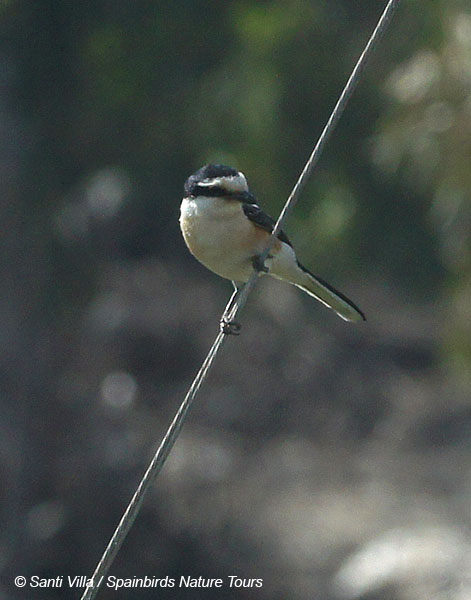
Alcaudón común / Woodchat Shrike

Mirador Cachón de Camaces / Viewpoint Cachon de Camaces

El torero... nuestro conductor / The bullfighter... our driver

Cantueso / French Lavander

Our last trip for SEO/BirdLife took us to the Arribes Natural Park, at Salamanca province, right next to the portuguese border. Amongst the most interesting species recorded were four species of eagles, Bonelli's, Booted, Short-toed and Golden, three vultures, Griffon, Egyptian and Black, two kites, Black and Red, Montagu's Harrier, Peregrine Falcon, Hawfinch, Siskin, Iberian chiffchaff, Willow Warbler, Dartford, Garden, Sardinian and Subalpine Warblers, Hoopoe, Wryneck and Woodchat Shrike. Wonderful butterfly experience with fantastic views of Spanish Festoon, Spanish and Common Swallowtail, Moroccan Orange Tip and Green-veined White. A little pond with several Marbled Newts was also a highlight.